

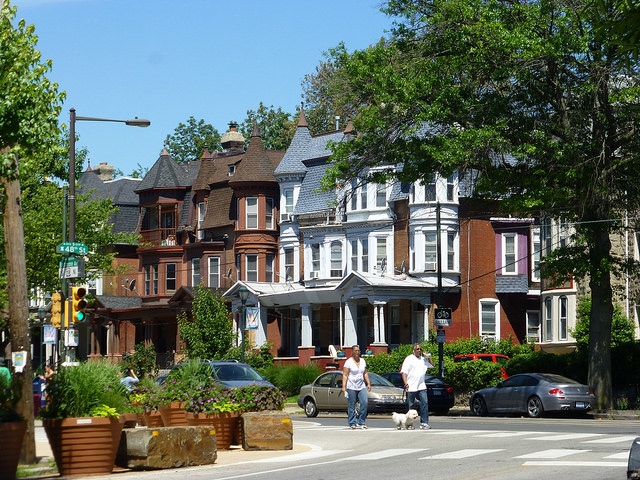
Philadelphia, one of the most reasonably priced large cities on the East Coast, combines big-city work and educational prospects alongside outstanding cultural, sports, and music scenes, as well as a distinctive role in American history. There is a lot of ground to cover, given that Philadelphia has up to 150 different neighborhoods and 100 suburbs. This neighborhoods guide will assist you whether you’re moving to Philadelphia from a nearby or distant location or simply changing locations within the city by assisting you in selecting the areas that most appeal to you while fitting your budget and commute demands. There’s a good possibility that even if you’re relocating across the country from another city, the cost of Philadelphia houses for sale will be lower than or roughly comparable to what you’re used to.
Chestnut Hill
Chestnut Hill, a little neighborhood tucked away in extreme northwest Philadelphia, got its start as a well-liked retreat for the elite of Center City during the Revolutionary War thanks to its rural beauty and lower summer temperatures because of its higher elevation. The upscale area is now calm along the residential streets lined with Victorian townhomes and historic mansions, while Germantown Avenue, which is lined with cobblestones, is bustling with activity. Boutiques, brewpubs, bakeries, and restaurants including Mica, CinCin, and Cake line the charming yet fashionable main street; many of them have outside seating so that patrons may enjoy the lovely spring and fall Philadelphia weather.
Rittenhouse Square
Rittenhouse, so named because it was one of the original five public squares that William Penn planned for his “greene country town,” is now a place of posh high-rise condos and flats that soar over the old park. Moreover, it has one of the highest costs of living in Philadelphia. Dog walkers, artists, people out after work, and young couples frequent the park every day, eating lunch on seats and taking strolls through the streets.
Fishtown
If you’ve seen “Dispatches from Other” on the AMC network, you’ve probably seen a lot of the eccentric and public art-focused area of Fishtown. The abundance of fishermen that lived in the area during its early history gave the neighborhood its name. By the Delaware River in North Philadelphia, the area has recently experienced tremendous growth as a hip arts, cultural, gourmet, and entertainment neighborhood. Rent and housing prices have increased in step with this growth.
University City
University City, located in West Philadelphia across the river from Center City, is the area that is home to the University of Pennsylvania, Drexel University, and University of the Sciences’ interconnecting campuses. With the construction of skyscrapers like Cira Center, Cira Center South, and the FMC Building since 2000, the Schuylkill River neighborhood is a center for business and education that is gradually growing into a second downtown. The 14-acre Schuylkill Yards, a sizable multi-tower and public space redevelopment project currently under construction, and Station Plaza, a $6.5 billion open space development centered on Amtrak’s famed 30th Street Station, are two major factors contributing to the region’s continued growth.
Society Hill
The Free Society of Merchants, a group of influential corporate and cultural figures that guided Philadelphia’s development in the 17th century, is where the haughty moniker of Society Hill comes from. A cluster of old Georgian row houses may be found in the Center City district today, which is surrounded by brick sidewalks and Franklin lights on cobblestone streets. Society Hill, which is one of Philadelphia’s priciest neighborhoods yet has one of the lowest crime rates in the city, is located in the backyard of Independence Hall and the Liberty Bell in Old City. Society Hill offers a wide range of contemporary entertainment and nightlife spots in addition to all those old structures and significant locations that our Founding Fathers previously frequented.
About the Author


