

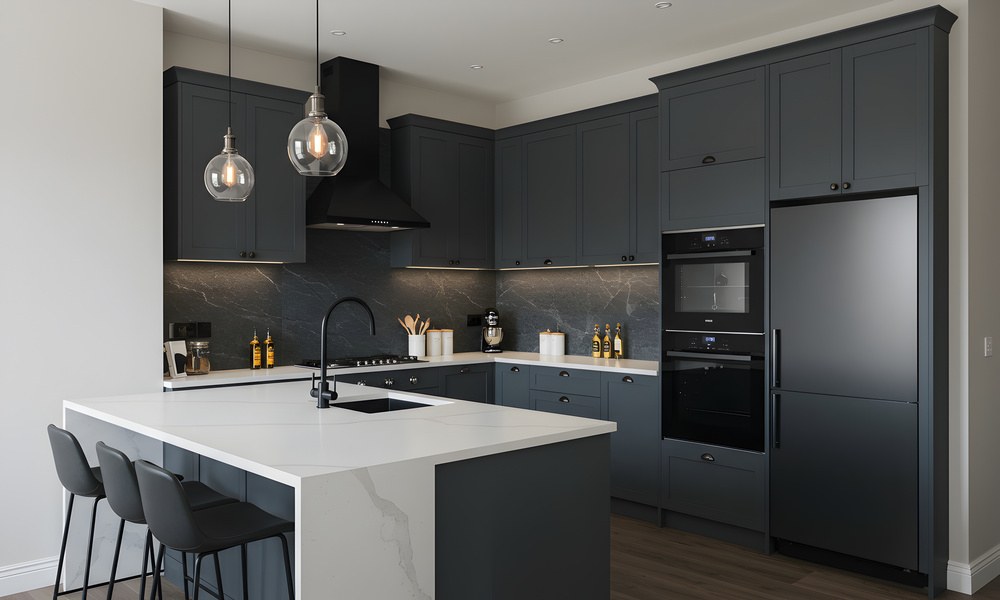
A modern kitchen featuring dark gray cabinets paired with white quartz countertops, creating a sleek and elegant design. The kitchen includes a central island with bar stools, providing a perfect space for dining or gathering. Recessed lighting and pendant lights illuminate the area, enhancing the clean and minimalist aesthetic of the interior.
Personalisation is at the heart of modern interior design, especially when it comes to bedrooms. As the most private and personal room in a home, the bedroom should reflect individual taste, style, and comfort preferences. One of the most effective ways to achieve this is through bedroom panelling. It provides not just aesthetic value but a wide range of customisation options that allow homeowners to tailor their space exactly to their liking.
A Custom Look for Every Style
Bedroom panelling comes in many styles, from classic to contemporary, rustic to refined. This variety makes it easy to align with any interior theme. Traditional designs such as shaker panels or wainscoting offer a timeless, structured appearance that suits elegant or vintage-inspired spaces. On the other hand, sleek vertical slats or fluted panels deliver a more modern, minimalist feel.
Homeowners can select the type of panel layout that best suits their room’s architecture and personal preference. Whether covering an entire wall, just the headboard area, or even wrapping around the room, panelling can be adapted in scale and design to suit any layout.
Materials That Reflect Personality
The choice of material plays a crucial role in creating a personalised space. Wood brings natural warmth and can be left raw for a rustic appeal or stained and painted for a more refined look. MDF is a popular choice for painted finishes, offering a smooth surface for clean, crisp lines. Upholstered panels, using fabric or leather, add a tactile element and can make the bedroom feel softer and more luxurious.
For eco-conscious individuals, sustainable materials like bamboo or reclaimed wood provide a personalised design choice that aligns with their values. Each material brings its own character and can be finished in ways that match the desired mood—whether that’s bold and dramatic or soft and calming.
Colour as a Creative Tool
Colour is one of the simplest yet most impactful ways to personalise bedroom panelling. Soft neutrals promote calm and relaxation, ideal for restful environments. Darker hues such as navy, forest green, or charcoal grey create a cocooning effect, perfect for making a statement. Pastels, meanwhile, can introduce a playful or romantic vibe.
The beauty of painted panelling lies in its flexibility—it can be changed over time to suit evolving tastes. This makes it an ideal design feature for those who enjoy updating their space regularly.
Combining Panelling With Other Design Elements
Panelling works well with other design features, allowing for endless customisation. It can frame artwork, integrate with shelving units, or work alongside built-in lighting for a cohesive and functional wall. For a boutique hotel-inspired bedroom, panelling behind the bed can be extended to create built-in nightstands or wall-mounted reading lights.
In smaller rooms, narrow vertical panels can give the illusion of height, while horizontal layouts can make the space feel wider. These visual tricks not only enhance aesthetics but also contribute to a more personalised experience based on the room’s proportions.
Conclusion
Bedroom panelling offers a highly adaptable design solution for creating a personalised interior. With endless options in style, material, and colour, it empowers homeowners to craft a bedroom that reflects their identity and enhances their comfort. Whether understated or expressive, panelling is a versatile design choice that makes personalisation both practical and beautiful.


